Device catalog
Every device has a story
Specs, variants, and the repair ecosystem around each device — from the platform built on verified repair records.
-
 Nintendo Virtual Boy The Virtual Boy is a video game console developed and manufactured by Nintendo and released in Japan on July 21, 1995, and in North America on August 14, 1995. Promoted as the first system capable of rendering stereoscopic 3D graphics, it featured a red monochrome display viewed through a binocular eyepiece, with games employing a parallax effect to simulate depth. The console struggled commercially, and its limited market performance led Nintendo to discontinue production and game development in 1996, following the release of only 22 games.
 -
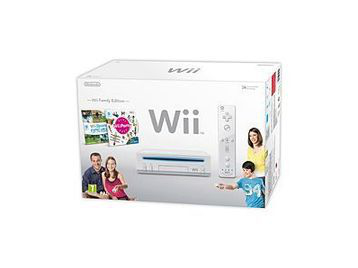 Nintendo Wii Nintendo Wii Family Edition. Platform: Wii. Product colour: White
 -
 Nintendo Wii U The Wii U is a home video game console developed by Nintendo as the successor to the Wii. Released in late 2012, it was the first eighth-generation video game console and competed with Microsoft's Xbox One and Sony's PlayStation 4.
 - Panasonic 3DO (FZ-1) Panasonic 3do: 32-bit ARM60 RISC. Released in 1993.
-
 Philips CD-i The Compact Disc-Interactive is a digital optical disc data storage format as well as a hardware platform, co-developed and marketed by Dutch company Philips and Japanese company Sony. It was created as an extension of CDDA and CD-ROM and specified in the Green Book specifications, co-developed by Philips and Sony, to combine audio, text and graphics. The two companies initially expected to impact the education/training, point of sale, and home entertainment industries, but the CD-i is largely remembered today for its video games.
 - Sega 32X Sega 32x: 2x Hitachi SH-2 (SH7095) 32-bit RISC @ 23.01 MHz. Released in 1994.
- Sega CD Sega cd: Motorola 68000 @ 12.5 MHz (16-bit). Released in 1992.
- Sega Dreamcast Sega dreamcast: Hitachi SH-4 32-bit RISC @ 200 MHz (360 MIPS, 1.4 GFLOPS). Released in 1998.
-
 Sega Genesis The Sega Genesis, known as the Mega Drive outside North America, is a 16-bit fourth generation home video game console developed and sold by Sega. It was Sega's third console and the successor to the Master System. Sega released it in October 1988 in Japan as the Mega Drive, and in August 1989 in North America as the Genesis. In 1990, it was distributed as the Mega Drive by Virgin Mastertronic in Europe, Ozisoft in Australasia, and Tectoy in Brazil. In South Korea, it was distributed by Samsung Electronics as the Super Gam*Boy and later the Super Aladdin Boy.
 - Sega Master System Sega master system: Zilog Z80A, 8-bit, rated for 4 MHz but runs at approximately 3.58 MHz, ROM cartridges (Mega Cartridges) held up to 4 Mbit (512 KB) of code/data storage. Released in 1985.
- Sega Saturn Sega saturn: 2x Hitachi SH-2 @ 28.6 MHz (~56 MIPS). Released in 1994.
-
 Neo Geo AES The Neo Geo, stylized as NEO•GEO, is a video game platform released in 1990 by Japanese game company SNK Corporation. It was initially released in two ROM cartridge-based formats: an arcade system board and a home video game console. A CD-ROM-based home console iteration, the Neo Geo CD, was released in 1994. The arcade system can hold multiple cartridges that can be exchanged out, a unique feature that contrasted to the dedicated single-game arcade cabinets of its time, making it popular with arcade operators.
 - PlayStation (PS1) Sony ps1: MIPS R3000A 32-bit RISC @ 33.8688 MHz. Released in 1994.
- PlayStation 2 Sony ps2: Emotion Engine, custom 128-bit RISC. Released in 2000.
- PlayStation 3 (Fat) Sony ps3 fat: Cell Broadband Engine @ 3.2 GHz (1 PPE + 7 SPE, 6 usable). Released in 2006.
-
 PlayStation 3 (Slim) Sony ps3 slim: Cell Broadband Engine (45 nm process). Released in 2009.
 -
 PlayStation 4 The PlayStation 4 (PS4) is a home video game console developed by Sony Interactive Entertainment. Announced as the successor to the PlayStation 3 in February 2013, it was launched on November 15, 2013, in North America, November 29, 2013, in Europe, South America, and Australia, and on February 22, 2014, in Japan. A console of the eighth generation, it competed with Microsoft's Xbox One and Nintendo's Wii U and Switch.
 -
 PlayStation 5 The PlayStation 5 (PS5) is the home video game console developed by Sony Interactive Entertainment for the fifth iteration of their PlayStation brand. It was announced as the successor to the PlayStation 4 in April 2019, was launched on November 12, 2020, in Australia, Japan, New Zealand, North America, and South Korea, and was released worldwide a week later. The PS5 is part of the ninth generation of video game consoles, along with Microsoft's Xbox Series X/S consoles, which were released in the same month.
 - PlayStation 5 Pro Sony ps5 pro: AMD Zen 2, 8 cores, SSD storage. Released in 2024.
- Steam Deck (LCD) Valve steam deck lcd: Zen 2 4-core/8-thread, 2.4-3.5 GHz, 64 GB eMMC / 256 GB NVMe / 512 GB NVMe storage. Released in 2022.
- Steam Deck OLED Valve steam deck oled: AMD Zen 2, 4 cores / 8 threads, 2.4-3.5 GHz, 512 GB or 1 TB NVMe SSD storage. Released in 2023.